
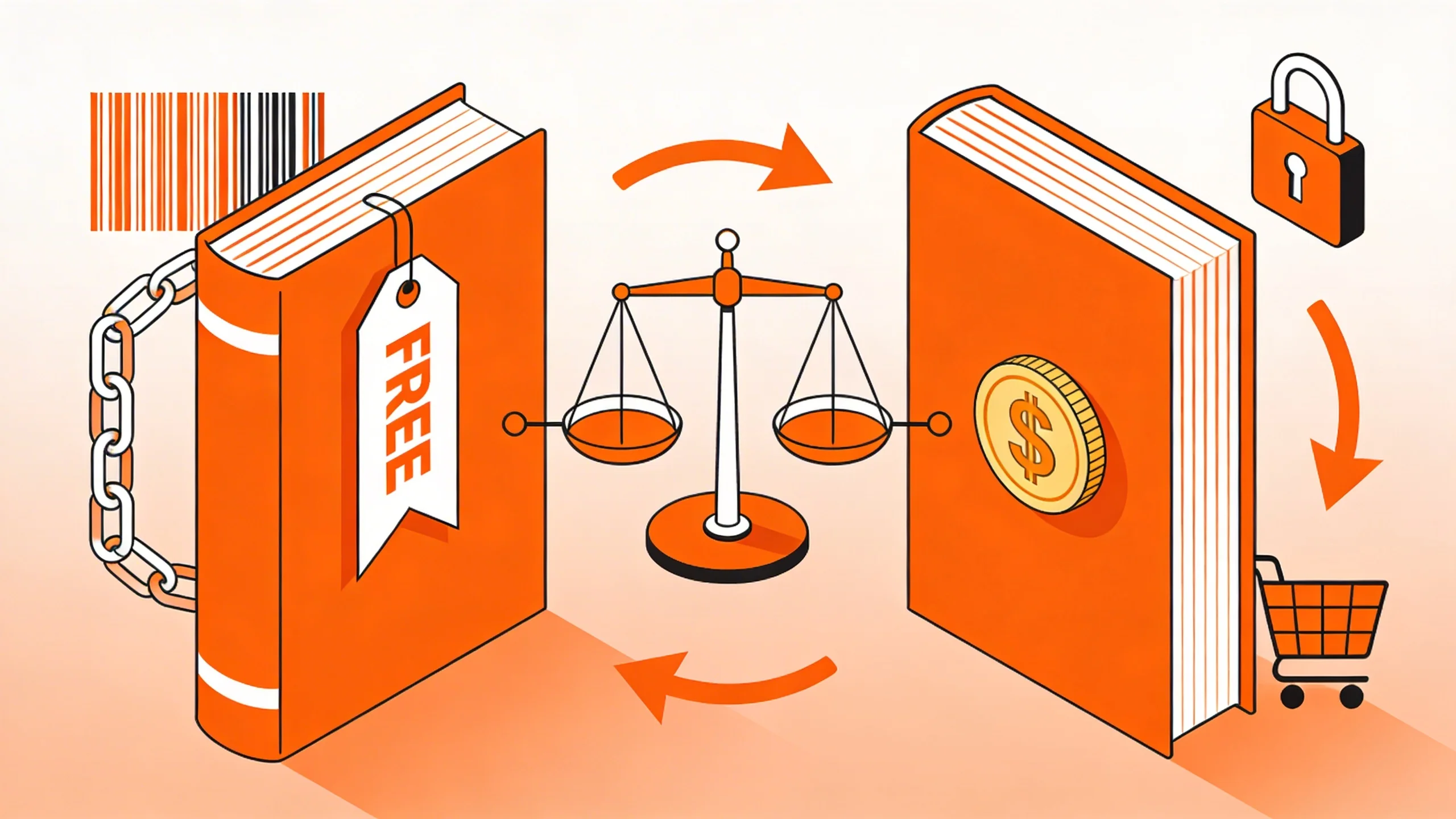
Free ISBN vs Paid ISBN: When Does It Make Sense to Pay?
Free ISBNs from Amazon KDP seem tempting, but they come with strings attached. Here’s when paying for your own ISBN makes financial sense.
Every self-published author faces the same decision at some point: should you use a free ISBN from your distributor, or buy your own?
The answer isn’t always obvious. Free ISBNs work fine for many authors. But paid ISBNs unlock options that free ones simply don’t offer.
Here’s the honest breakdown of when free makes sense—and when you should open your wallet.
What Is a Free ISBN?
When you publish through Amazon KDP, they offer you a free ASIN (Amazon Standard Identification Number). This is not technically an ISBN, but it serves a similar purpose for Amazon’s ecosystem.
Draft2Digital and Smashwords also offer free ISBNs when you distribute through their networks.
These are called “publisher-assigned” ISBNs. The publisher (Amazon, D2D) is listed as the registrant, not you.
What Is a Paid ISBN?
When you buy an ISBN directly from an agency like Bowker (US), Nielsen (UK), or your local ISBN agency, you become the publisher of record. The ISBN is registered under your name or your publishing imprint.
This costs money—typically $125-$300 for a single ISBN depending on your territory, or less in bulk.
The Hidden Cost of Free ISBNs
A free ISBN from Amazon seems like a bargain. But here’s what you’re giving up:
1. You Don’t Control the Publisher Name
Your book will show Amazon Publishing (or similar) as the publisher on retailer sites. Readers—and librarians—may judge your book differently knowing it’s self-published vs. backed by a traditional publisher.
2. You Can’t Switch Distributors Easily
If you want to move from KDP Select to wide distribution later, you’ll need a new ISBN. All your reviews and sales history are tied to the old Amazon-assigned identifier.
3. Library and Bookstore Resistance
Many libraries and bookstores prefer to order from recognized publishers. A book showing “Amazon Publishing” may face additional scrutiny or rejection.
4. International Identification
Free ISBNs work within their ecosystem only. A KDP-assigned identifier isn’t recognized the same way in library databases outside the US.
When Free ISBNs Work Just Fine
Free ISBNs (or equivalent identifiers) are perfectly acceptable when:
- You’re testing a new pen name or niche
- Your goal is Amazon-only sales (KDP Select)
- You’re publishing low-content books (journals, planners)
- Budget is genuinely a barrier
- You have no plans for wide distribution
When Paid ISBNs Are Worth the Investment
Paying for your own ISBN becomes valuable when:
1. You Want a Professional Publisher Name
Your imprint appears as the publisher everywhere—Amazon, Goodreads, library catalogs, bookstores. This adds legitimacy.
2. You’re Going Wide
Selling on Kobo, Apple Books, Barnes & Noble, or libraries requires your own ISBN. You can’t use Amazon’s free identifier.
3. You Need Multiple Formats
Each format (ebook, paperback, hardcover, audiobook) needs its own ISBN. Free services often give you one identifier for all formats, which complicates tracking sales by format.
4. You’re Building a Publishing Business
If you plan to publish multiple books under a consistent brand, owning your ISBNs gives you long-term flexibility and brand control.
5. Library Distribution Is a Priority
Libraries use ISBNs for cataloging and discovery. A professionally registered ISBN under your name improves your chances of being included in library ordering systems.
The Bottom Line
| Scenario | Recommendation |
|---|---|
| Amazon-only, testing waters | Free ISBN (KDP ASIN) |
| Publishing one book, low budget | Free or cheapest option |
| Building a professional author business | Buy your own ISBNs |
| Wide distribution (Kobo, Apple, Nook) | Buy your own ISBNs |
| Library distribution goals | Buy your own ISBNs |
| Multiple formats (ebook, print, audio) | Buy your own ISBNs |
My Recommendation
If you’re serious about self-publishing as a business, buy at least 10 ISBNs upfront. Yes, it costs $200-$300. But that investment pays dividends in professional presentation, distribution flexibility, and long-term brand building.
If you’re casually publishing or testing a concept, free identifiers are fine—just understand their limitations before you hit publish.
The decision isn’t about free vs. expensive. It’s about matching your publishing goals with the right identifier strategy.

