
ISBN Numbers and Copyright: What Indie Authors Need to Know
ISBNs and copyright serve completely different purposes. Learn why having one doesn’t mean you have the other, and what indie authors actually need to protect their work.
Many indie authors confuse ISBNs with copyright protection. They assume that getting an ISBN automatically protects their creative work. This is a costly misunderstanding.
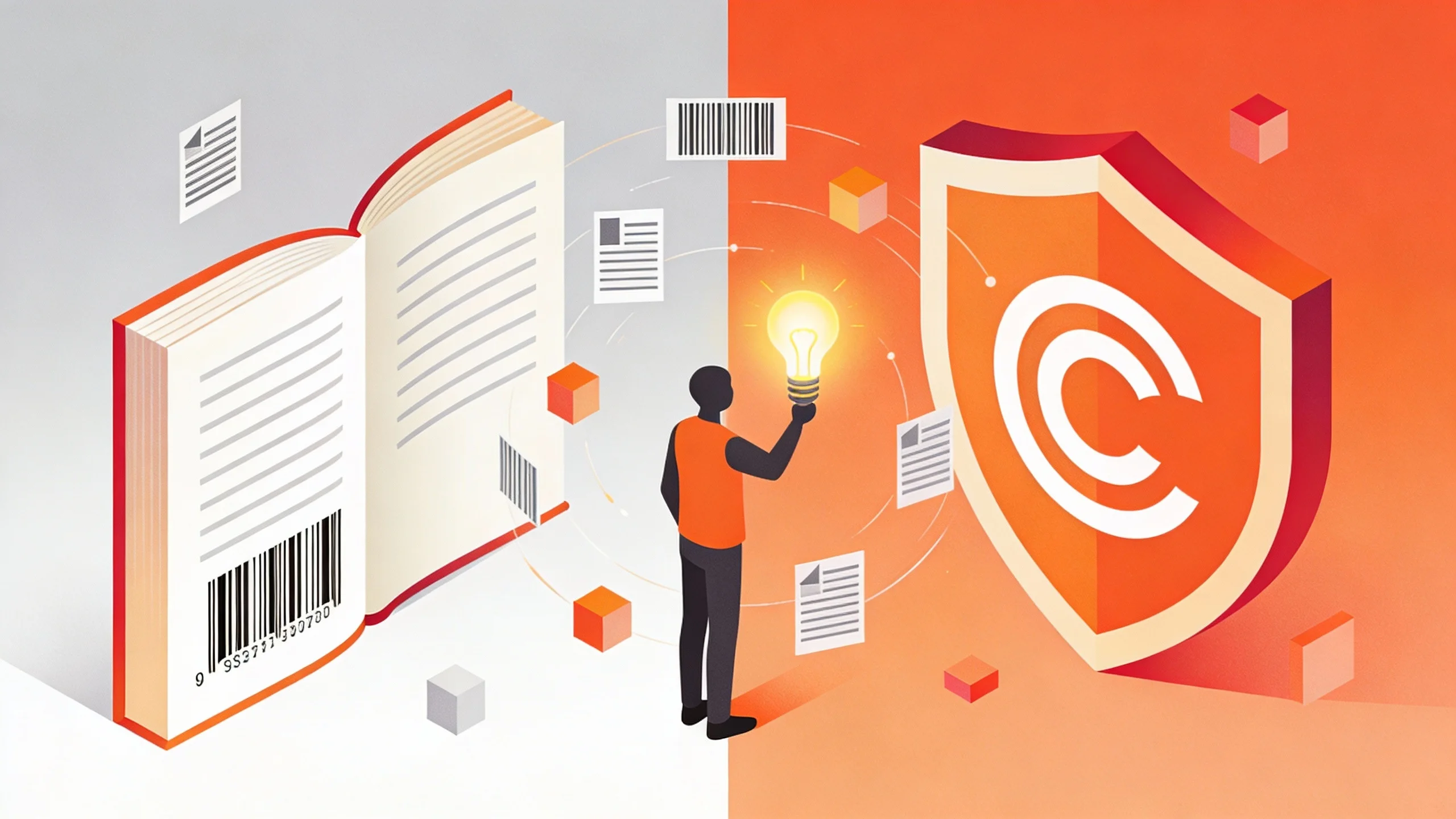
An ISBN is a product identifier. Copyright is legal protection for your intellectual property. These are two entirely separate concepts. Understanding the difference is essential for every self-publishing author.
What an ISBN Actually Does
An ISBN (International Standard Book Number) is a 13-digit code that identifies your book as a commercial product. Think of it like a barcode for groceries. It tells retailers, libraries, and distributors exactly which book they’re handling.
Here’s what an ISBN provides:
- Unique identification for your specific book edition
- Metadata linking for title, author, format, and publisher information
- Distribution access through bookstores, libraries, and online retailers
- Sales tracking across different platforms and markets
What an ISBN does not provide:
- Copyright protection
- Proof of authorship
- Legal ownership of content
- Protection against plagiarism
For more on why ISBNs matter for distribution, see our guide on the importance of ISBNs for self-publishing authors.
What Copyright Actually Does
Copyright protects your original creative work. It gives you exclusive rights to reproduce, distribute, and create derivative works from your book. Unlike an ISBN, copyright is automatic.
The moment you write your manuscript and save it, you own the copyright. No registration required. No fees. Your work is protected under copyright law in the United States and most countries worldwide.
However, registering your copyright provides additional benefits:
- Creates a public record of your ownership claim
- Required before filing an infringement lawsuit in the U.S.
- Enables you to recover statutory damages and attorney fees
- Provides legal evidence if disputes arise
For a complete walkthrough of the registration process, read our article on how to copyright a book before publishing.
The Key Difference Explained
| Aspect | ISBN | Copyright |
|---|---|---|
| Purpose | Product identification | Legal protection |
| Cost | Varies by country ($125+ in U.S.) | Free automatically, ~$45-65 to register |
| Format | One per edition/format | One covers all formats |
| Protection | None | Exclusive rights to your work |
| Required for | Wide distribution | Legal enforcement |
Here’s a simple way to remember it: An ISBN tells the world which book you published. Copyright proves the content belongs to you.
Common Misconceptions Cleared Up
“My ISBN proves I wrote this book”
No, it doesn’t. An ISBN only identifies the book as a commercial product. Anyone can purchase an ISBN and assign it to a book. The ISBN registry tracks publishers, not authors.
“I registered my ISBN, so I’m protected”
ISBN registration creates a product listing in databases like Books in Print. It does not register your copyright or provide legal protection.
“Free ISBNs from Amazon protect my work”
Platform-provided ISBNs are tied to that platform’s distribution. They don’t grant copyright protection. Plus, the platform becomes the publisher of record, limiting your control.
“I need multiple copyrights for different formats”
No. One copyright registration covers your content regardless of format. You need separate ISBNs for paperback, hardcover, and ebook editions. But the underlying copyright remains the same.
What Indie Authors Should Actually Do
Protect your work properly with these steps:
- Register your copyright before or shortly after publishing. Visit copyright.gov and complete the form. The fee is currently $45-65.
- Include a copyright notice on your copyright page: © [Year] [Your Name]. All Rights Reserved.
- Purchase your own ISBNs if you want professional distribution control. In the U.S., buy from Bowker. In India, get your ISBN from isbn.co.in.
- Keep documentation of your work’s creation dates. Email yourself drafts, use version control, or keep timestamped backups.
- Add ISBNs to each format you publish. Your paperback, hardcover, and ebook each need unique identifiers for proper sales tracking.
A Practical Checklist
Before you publish, verify you’ve handled both:
Copyright:
- [ ] Copyright notice on the copyright page
- [ ] Registration filed (recommended, not required)
- [ ] Documentation of creation dates saved
ISBN:
- [ ] ISBN obtained for each format
- [ ] ISBN displayed on copyright page
- [ ] Barcode added to back cover (print books)
- [ ] Metadata registered with ISBN agency
The Bottom Line
ISBNs and copyright serve completely different purposes. Don’t rely on one to do the other’s job.
Get your ISBN for distribution and discoverability. Register your copyright for legal protection. As an indie author, understanding this distinction saves you from preventable problems down the road.
Need ISBNs for your next book? Check our ISBN pricing for affordable options that keep you as the publisher of record.

