
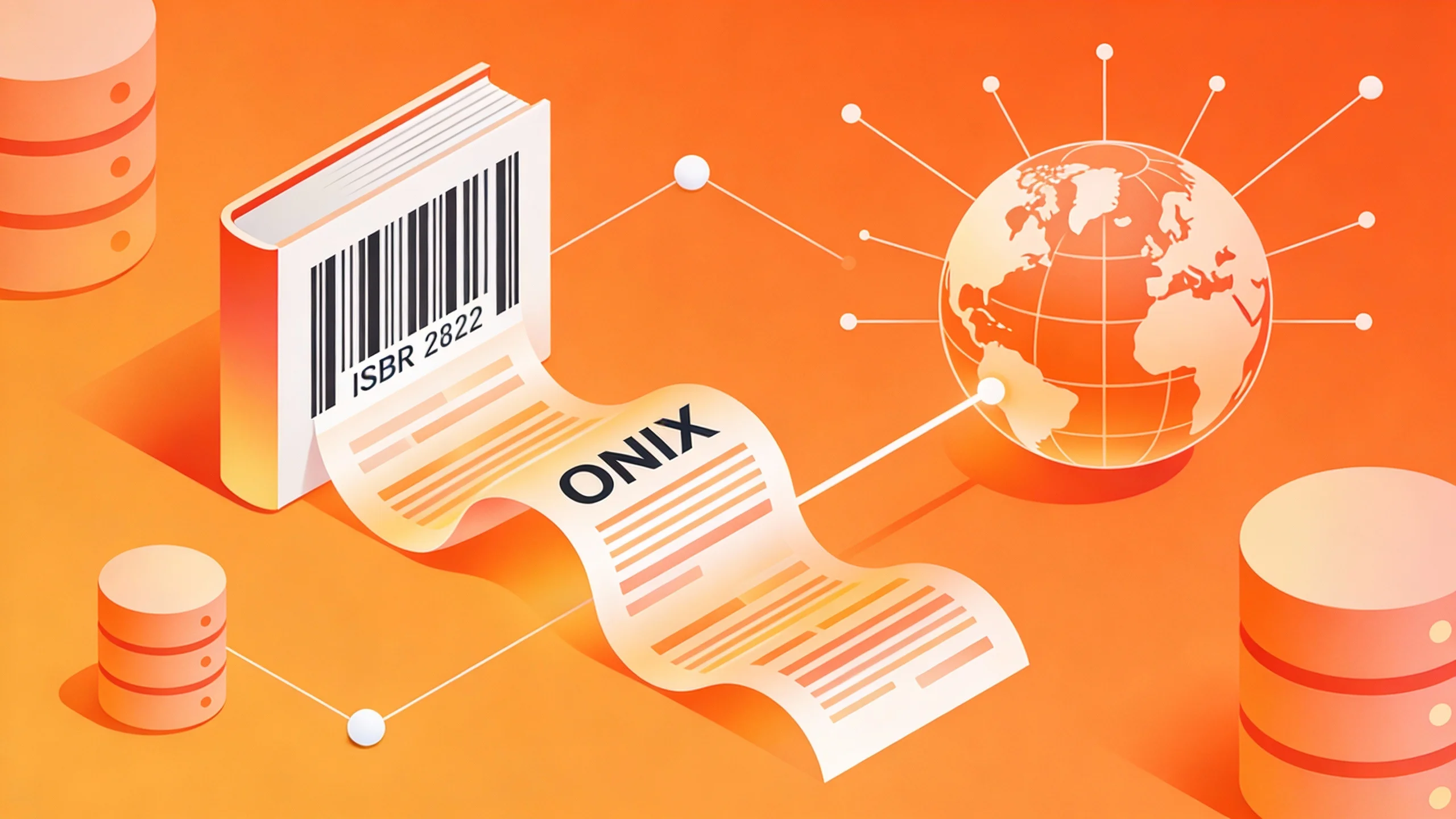
How ISBN Works with ONIX Metadata for Global Distribution
Your ISBN is just the ID card; ONIX is the resume. Learn how these two systems work together to send your book’s data to retailers worldwide.
You’ve secured your ISBN, but having that 13-digit number is only the first step. For your book to actually appear on Amazon, Barnes & Noble, and library catalogs worldwide, that number needs to travel.
This is where ONIX enters the picture. Think of your ISBN as your book’s passport number, and ONIX (ONline Information eXchange) as the detailed visa application that tells the world everything about it. Without ONIX, your ISBN is just a number in a void.
What is ONIX?
ONIX for Books is the global standard for representing and communicating book industry product information. It is an XML-based format that allows publishers to share rich data with wholesalers, distributors, and retailers in a consistent way.
Before ONIX, every retailer might have asked for book data in a different spreadsheet format. Now, a single ONIX “feed” can carry:
- Bibliographic data: Title, author, format, page count.
- Marketing collateral: Cover images, descriptions, reviews, author bios.
- Commercial details: Price, currency, availability, and distinct sales rights for different countries.
The ISBN: The Anchor of the Data
In the vast sea of global book data, the ISBN acts as the anchor. Within an ONIX file, the ISBN is the primary identifier that links all that rich information to your specific product.
When a retailer’s system receives an ONIX update, it looks for the ISBN (specifically identified as ProductIdentifier with type 15 in ONIX 3.0 code). It uses that number to know exactly which record to create or update.
If you have a hardcover, a paperback, and an eBook, each will have its own ISBN and its own distinct entry in the ONIX feed, ensuring customers don’t accidentally order the wrong format.
How the Distribution Chain Works
For most indie authors, you won’t be writing raw XML code. You will likely interact with a dashboard provided by a distributor like IngramSpark or Draft2Digital. Here is what happens behind the scenes:
- Input: You enter your book details (metadata) into your distributor’s platform.
- Generation: The platform converts your data into an ONIX message.
- Transmission: This message is sent via an ONIX feed to major data aggregators (like Bowker) and retailers.
- Ingestion: Retailers like Amazon “ingest” this feed. Because the data is standardized, their systems automatically populate the sales page with your cover, description, and price.
Why Quality Metadata Matters
Since the ISBN and ONIX feed automate the listing process, the quality of your data determines your success.
A generic “book” listing with no cover and a one-sentence description will never sell, even if it has a valid ISBN. Studies consistently show that titles with “rich” metadata—comprehensive descriptions, reviews, and detailed classification codes—sales significantly better than those without.
Conclusion
Your ISBN identifies the book, but ONIX sells it. Together, they form the backbone of the global publishing supply chain.
For self-publishing authors, the takeaway is simple: Fill out every single field in your publishing platform. That data is being packed into an ONIX message and sent around the world. Make sure it tells the best possible story about your book.